

Key Takeaways:
- Composite decking eliminates 90% of maintenance while lasting 25-30 years in our climate
- Multi-level designs work especially well on sloped lots common in Northern Virginia
- Cable railings maximize views of our beautiful tree canopy
- Built-in seating and planters add function without expanding your deck’s footprint
- Spring renovations beat the summer rush and often save 10-15% on labor costs
- Most deck renovation ideas in the DMV require permits—we handle this entire process for you
- The best deck renovation ideas combine 2-3 improvements for maximum impact and value
We’ve been renovating decks across Northern Virginia, DC, and Maryland for over 15 years. Between the humid DC summers and those unpredictable Maryland ice storms, your deck renovation needs to be both beautiful AND built to last.
Here’s what we know: deck renovation in the DMV isn’t one-size-fits-all. The ideas that work depend on your specific situation: your deck’s current condition, your neighborhood’s style, and yes, your budget. Whether you’re dealing with rotting boards or just ready for an upgrade, these renovation ideas come from real projects across the region. (And if you’re battling our brutal summer sun, that’s a whole different challenge.)
Ready to explore what actually works? Let’s dive in.
Switch to Composite Decking for a Maintenance-Free Makeover
If you’re tired of staining your deck every spring (and let’s be honest, who isn’t?), switching to composite might be your best move.
We see this transformation constantly. Usually goes like this: homeowner battles wood maintenance for years, gets fed up after finding more rot, then finally pulls the trigger on composite. Best decision they ever made, at least that’s what they tell us a year later when we’re back to build their neighbor’s deck.
Modern composites have come a long way. We’re installing materials that actually look like wood now:
- Real grain patterns (not that fake plastic look from 10 years ago)
- Color variations that fool other contractors
- Zero maintenance besides hosing it off
- 25-30 year warranties that actually mean something
Now, the elephant in the room: cost. Composite decking requires a higher upfront investment than wood. But think about it. No more stain. No more replacing boards. No more splinter removal sessions before family gatherings.
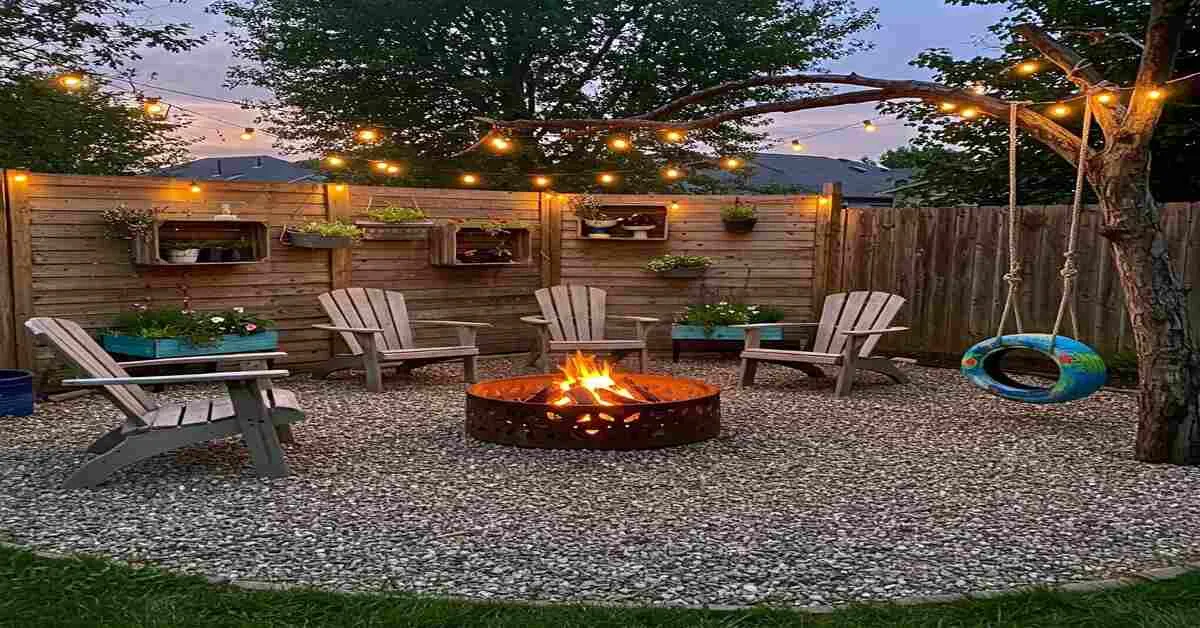
The kicker? These materials handle DMV weather like champs. That brutal July humidity that warps wood boards? Composite doesn’t care. Those surprise March freezes? Not a problem. We’ve even helped clients combine composite decking with concrete patio areas to create separate zones. Deck for dining, concrete for the fire pit. It’s a smart way to maximize your outdoor space without breaking the bank.
Add a Second Level to Create Defined Outdoor Zones
Here’s something we learned from years of deck renovations: most people don’t need a bigger deck, they need a smarter deck. Adding a second level transforms how you actually use your outdoor space.
Think about it. Right now, your grill probably sits next to your dining table, which bumps up against your kid’s play area. Everything’s crammed onto one flat surface. We see this all the time, especially on those typical Northern Virginia lots where the yard slopes away from the house.
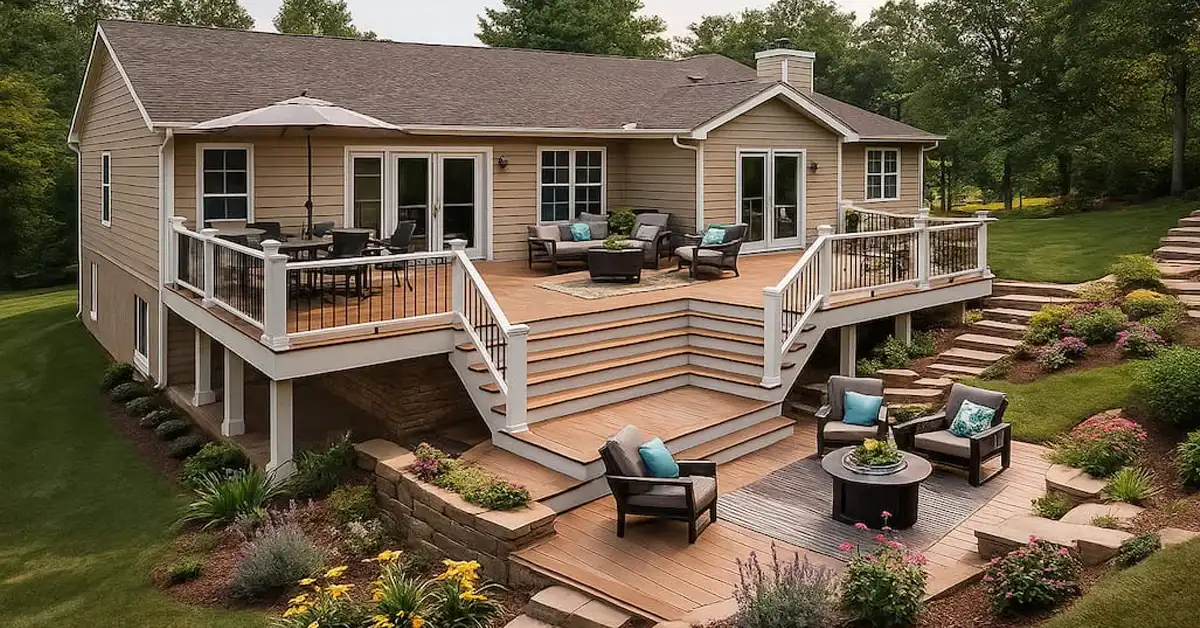
Those sloped lots we mentioned? They’re perfect for multi-level designs. Instead of building massive support posts for one huge elevated deck (expensive and honestly, kind of ugly), we work with the natural grade. Upper level stays close to your home’s main floor for easy kitchen access. Lower level steps down to meet your yard, creating a natural transition to the lawn.
The magic happens when you separate activities. Upper deck for grilling and dining keeps smoke away from the house. Lower level becomes your lounging and fire pit zone. Built-in stairs double as extra seating during parties. Each level feels like its own “room” without walls.
Adding a second level to an existing deck is a significant project, but compared to a ground-up rebuild or home addition, it often makes more sense. Some homeowners even mix materials to save money, like keeping wood up top while going with stamped concrete on the lower level. Different materials create different vibes for each space without blowing the budget.
One heads up: multi-level renovations always require permits in the DMV. The good news? We handle all that paperwork. The waiting period actually works in your favor, gives us time to order materials and lock in spring scheduling.
Upgrade to Cable Railings for an Open, Modern Look
Cable railings changed everything for deck design. We started installing them about five years ago, and now they’re requested on nearly half our renovation projects. The appeal is simple: you get safety without sacrificing your view.
Traditional wood railings block about 30% of what you’re looking at. Cable systems? Maybe 5%. That difference is huge when you’ve got mature trees in Fairfax County or any kind of water view. Your deck suddenly feels twice as big, even though nothing else changed.
The practical benefits stack up fast:
- Stainless steel cables shrug off DMV humidity (no rust, no rot)
- Zero repainting or restaining
- Kids can’t climb them like horizontal slats
- Meet or exceed all local building codes
- Work with modern or traditional deck styles
Cable railings are a similar investment to high-end composite railings, honestly. The difference? Cable railings basically last forever — we’re talking 20+ years with nothing more than an occasional rinse with the hose.
Now for the reality check. Your deck posts need to handle serious horizontal tension from the cables. Wobbly 4x4s won’t cut it. Sometimes we need to reinforce or replace posts first, which adds to the project. Also, some HOAs get weird about cable railings. Always worth a quick check before we start ordering materials.
Build In Seating and Storage to Maximize Every Square Foot
Built-in seating changes how a deck works. Instead of furniture you shuffle around, you get permanent solutions that actually make sense for your space.
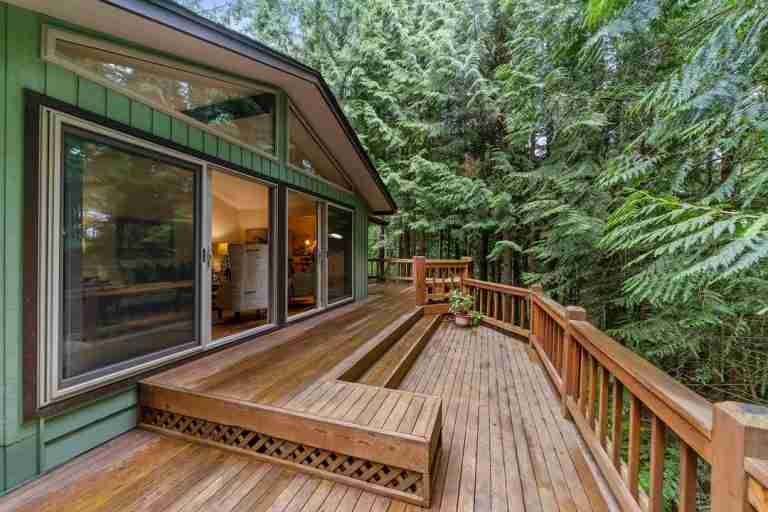
That awkward corner where chairs never quite fit? Perfect spot for an L-shaped bench. The deck perimeter everyone walks along anyway? Add a storage bench and gain 20+ cubic feet of hidden space for cushions and kids’ toys. We build these from the same material as your decking, so they look like they were always part of the plan.
Most built-ins run 17-18 inches high and deep. Comfortable for sitting, roomy enough for storage. Composite works great for the tops since nobody wants splinters. Weather-resistant hinges keep everything working smoothly through our wet springs and humid summers.
Quality outdoor furniture costs nearly the same and doesn’t add property value. Built-ins do. They’re the kind of feature that makes buyers take notice.
Quick note on drainage: Maryland rain is relentless. We always leave gaps between bench slats so water runs through instead of pooling inside storage compartments. Keeps everything from getting musty.
Extend Your Deck Without Starting from Scratch
Sometimes your deck is fine, just too small. Maybe the kids are older and you need more entertaining space. Or you finally bought that outdoor dining set and realized there’s no room to walk around it. Extensions make sense when your existing deck is structurally sound but spatially challenged.
The tricky part is matching what’s already there. Wood decks that are five years old won’t match new lumber, even from the same species. Colors different, grain patterns don’t line up. We usually recommend extending with a complementary material instead of trying to match exactly. Like adding a composite section to a wood deck, or using a different decking pattern to make the addition look intentional.
Structural integration matters more than aesthetic matching:
- Extension must tie into existing frame properly (not just butt against it)
- Requires exposing rim joists and adding proper hangers
- Original structure might need reinforcing for extra load
- Anything over 200 square feet needs permits in the DMV
- Professional installation ensures everything meets code
Cost-wise, extensions typically run 20-30% more per square foot than new construction. Why? All that custom fitting and integration work. But it’s still cheaper than tearing everything down and starting over.
Extensions also let you fix original design mistakes. Deck too high off the ground? Add a lower platform with steps. No shade? Extend out to that big oak tree and build around it. Missing storage? The new section can include built-in solutions from day one.
Integrate Your Deck with Existing Landscaping
That big oak tree doesn’t have to go. Neither does your wife’s prized garden bed. Good deck renovations enhance your landscaping instead of destroying it.
Building around mature trees takes some planning. The deck needs an opening larger than the trunk (we typically cut 6-8 inches out) because trees sway in wind. Get this wrong and you’ll hear creaking every time a breeze kicks up. But get it right? Natural shade that would cost thousands to recreate with a pergola.
Garden beds along the deck edge can become features instead of obstacles. We frame around them or incorporate raised planters into the deck design. Suddenly that awkward corner where the hosta grows becomes an intentional design element. Plus, raised planters put your herbs at the perfect height for grabbing while you’re grilling.
Transition zones between deck and yard need attention too:
- Decorative stone borders handle rain runoff from the deck
- Stepping stone paths prevent worn grass trails
- Gravel strips stop mud from splashing onto the deck
- Built-in planters create soft edges between hardscape and landscape
Yes, working around roots and existing plants complicates things. Sometimes we’re hand-digging post holes to protect a tree’s root system. Other times we’re adjusting measurements because that azalea is bigger than the homeowner remembered. Takes more time but saves you from starting over with baby plants and waiting five years for shade.
Add a Second Deck to Create Separate Entertainment Areas
Not every deck renovation means tearing up what you have. Sometimes the smartest move is leaving your existing deck alone and adding a completely separate one. Sounds extravagant? It’s actually more practical than you’d think.
We see this work best when homeowners have different needs pulling in different directions. Your existing deck off the kitchen is perfect for morning coffee and quick dinners. But you also want a party space away from the house where noise won’t wake the kids. Or maybe you need a quiet retreat separate from the main entertaining area. Two decks solve problems one big deck can’t.
The key is connecting them thoughtfully. We typically suggest stepping stone paths for decks that are truly separate. For closer structures, we might build a small bridge or walkway. We’ve helped homeowners connect their deck to an enclosed patio space, creating three distinct zones: open deck for grilling, enclosed area for bug-free dining, and second deck for the hot tub or fire pit.
Separate decks also let us play with different heights and materials. Keep the house-attached deck high for easy kitchen access while building the second one at ground level for garden connection. Use composite on the high-traffic main deck but go with natural wood for the intimate seating area. Some clients even mix in stone or concrete elements between structures to create visual separation.
When we price out a second 200-square-foot deck, it often runs less than expanding your existing one by the same amount. No demo work, no complicated tie-ins, no matching old materials. Just fresh construction where you want it. Plus, separate structures under 200 square feet often have simpler permit requirements in many DMV jurisdictions. We handle all the permit research, but it’s nice when projects move faster through approval.
Create an Outdoor Kitchen Zone on Your Existing Deck
Outdoor kitchens used to mean massive built-in islands and complex builds. Not anymore. We’re helping homeowners create functional cooking spaces on their existing decks for a fraction of that cost.
The trick is working with your deck’s current structure and capacity. Most decks can handle a quality grill, prep station, and storage without any reinforcement. Add a pergola for definition, run a gas line from the house, and suddenly you’re cooking outside all summer. We’ve found that even basic outdoor kitchen setups triple how often families use their decks.
Start simple. A good gas grill with side burner, weatherproof storage cabinet, and small prep counter gives you 80% of what those magazine-worthy kitchens offer. Position everything along the deck’s strongest edge (usually against the house) to distribute weight properly. Later you can add the mini-fridge, sink, or whatever makes sense for how you actually entertain.
Electrical and gas rough-ins are where we see people get stuck. Code requirements in the DMV are strict about outdoor outlets and gas connections. We always bring in licensed electricians and plumbers for these pieces. Yes, it adds cost, but it’s not worth risking your home insurance or family safety to save a few hundred dollars.
The payoff goes beyond convenience. Homes with outdoor cooking areas sell faster and for more money in our market. Even a basic setup adds perceived value way beyond the actual investment. If you’re curious about layout options and what works in our climate, check out our complete outdoor kitchen guide. We cover everything from budget-friendly starts to full outdoor entertaining spaces.
Ready to Transform Your Deck?
After 15 years of deck renovations across the DMV, we’ve learned something important: the best deck isn’t the one in magazines. It’s the one that fits your life, handles our weather, and makes you want to spend time outside.
Whether you’re dealing with rotting boards in Rockville or just ready for an upgrade in Arlington, these renovation ideas are just the starting point. Every deck tells a different story. Maybe yours needs composite decking to end the maintenance nightmare. Maybe it’s crying out for a second level to handle your growing family. Or maybe you’re ready to go all-in with that outdoor kitchen you’ve been dreaming about.
While we’ve focused on practical renovations for DMV decks, sometimes browsing deck design galleries can spark ideas for your own renovation project. Just remember that what works in California might need tweaking for our climate.
The timing matters too. Spring gets crazy in our industry. By April, good contractors are booked through July. If you’re thinking about a renovation for this year’s outdoor season, now’s the time to start planning. We can work through design and permits during the slower months, then hit the ground running when weather breaks. (If you’re looking for a contractor who specializes in complete outdoor living spaces, not just decks, we handle those projects too.)
Get Your Free Deck Renovation Consultation
Let’s figure out which renovation ideas make sense for your specific situation. We’ll visit your property, assess your current deck, and provide honest recommendations, whether that’s a simple refresh or complete transformation.
What you’ll get:
- On-site evaluation of your current deck
- Accurate cost estimates (no surprises)
- Timeline that works with your schedule
- Permit handling for all DMV jurisdictions
Click here to request your free quote online – it only takes 2 minutes and we’ll get back to you within 24 hours.
FAQs About Deck Renovation Ideas
What's the most popular deck renovation idea for DMV homes?
Switching to composite decking tops the list. About 70% of our renovation projects include upgrading from wood to composite materials. It makes sense in our climate, no more annual staining, no rot from humidity, and the newer composites look incredibly realistic. The second most requested renovation is adding built-in seating with storage. DMV homeowners love maximizing space, and built-ins solve both furniture and storage challenges in one shot.
Which deck renovation adds the most value to my home?
Multi-level deck additions consistently deliver strong ROI in our market. They effectively add outdoor “rooms” without expanding the footprint, which appeals to buyers. Creating defined zones—like an upper level for dining and lower level for lounging—makes average-sized yards feel more spacious. Cable railings and composite decking upgrades also add value, especially when they modernize an older deck’s entire look.
Can I mix different renovation ideas on one deck?
Yes, and we actually recommend it. The best deck renovations combine 2-3 ideas for maximum impact. For example, upgrading to composite decking while adding built-in seating creates a cohesive, low-maintenance space. Or combine a deck extension with new cable railings to make your deck feel twice as large. Just avoid doing too much, you don’t want a cluttered space that tries to include every trend.
What deck renovation ideas work best for small spaces?
Built-in seating with storage is perfect for compact decks. You’re using the perimeter that’s usually wasted space anyway. Cable or horizontal railings also help—they make small decks feel more open than traditional picket-style railings. Skip the multi-level ideas on truly small decks; they’ll just make the space feel choppy. Instead, extend the deck slightly or add a connected ground-level patio area for a deck patio combo by using complementary materials.
Are there any deck renovation ideas I should avoid?
Skip ultra-trendy materials or colors that’ll look dated in five years. Strange composite colors and unusual stain choices from years past haven’t aged well. Also avoid renovations that don’t match your home’s architecture—super modern cable railings on a traditional Colonial can look off. And please, don’t DIY structural changes. Weekend warrior projects involving levels or extensions without proper support can be genuinely dangerous.RetryClaude can make mistakes. Please double-check responses.